
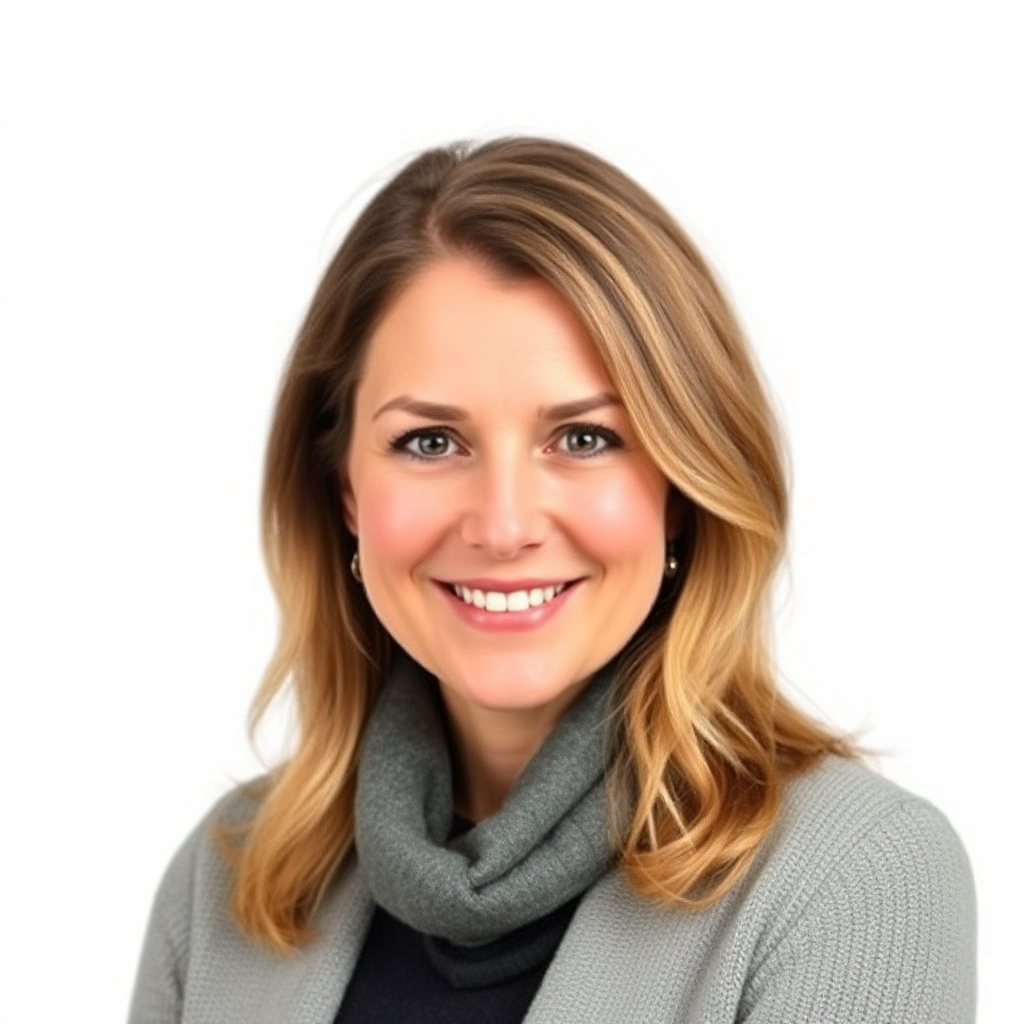
The deceased US second-in-command Dick Cheney, who has died at age 84, was regarded as one of the most significant holders of the vice-presidency in US history. Whereas numerous VPs had to settle for peripheral or symbolic positions, Cheney wielded substantial influence during the presidency of George W Bush, to the point that he was often called as the "true president".
Bush objected to such a characterisation and claimed the relationship was more complex. He pointed out that Cheney was courteous, always calling him in public settings as President, while he called him as Dick. Bush questioned even characterisations of their association as a partnership because it suggested that they were equals. Regardless of these denials, Cheney viewed the relaxed president pliable on a wide array of governmental choices.
The Post-9/11 Era
Leading of a contingent of neo-conservatives that included defence secretary Donald Rumsfeld and assistant defense secretary Paul Wolfowitz, he vigorously promoted the military intervention of Iraq in 2003 in answer to the 9/11 attacks on New York and Washington. During of the 9/11 assault, Bush had been participating in a meeting at a educational institution in Florida. While Bush traveled to a underground facility in Nebraska, Cheney assumed control, commanding the shooting down of any unresponsive aircraft approaching the Capitol building.
Cheney claimed the attacks changed him, causing him to be intent on retribution. Along with other conservative figures, such as Rumsfeld and Wolfowitz, he advocated for a takeover of Afghanistan in an effort to capture Osama bin Laden. Cheney then strongly advocated for the military action of Iraq, even though there was no evidence of Saddam Hussein playing a role.
Debated Policies
He expressed no regrets about the invasion, in which an estimated 100,000 Iraqis perished, and not about the waterboarding of individuals captured after 9/11. He informed CNN in 2015 that the Iraq invasion effort, which was based on faulty intelligence circulated by Cheney, was the right decision. "It was the right thing to do at that time. I was convinced then and I hold that view presently."
Yet during that period, there were dissenting voices at a top tier about the mishandling of Iraq. One of the White House's own delegates to the area, General Anthony Zinni (2001-03), was dismissed from the position. "I witnessed, at the very least," he wrote later "clear negligence, carelessness, and unaccountability: potentially, deception, incompetence, and graft."
Broader Context
Cheney was not completely accountable for the Iraq invasion. Before 9/11, Wolfowitz had called for comparable steps. He had written a memo setting out scenarios in which US concerns might be threatened (featuring "access to essential resources, primarily Persian Gulf oil"). Wolfowitz had asserted that "the United States should be postured to operate alone when joint efforts cannot be orchestrated," explicitly mentioning defense operations against Iraq.
Bush too had assumed the Oval Office generally inclined on executing what his parent had specifically avoided to do in 1991; topple Saddam. After he had been sacked by the administration, the Treasury head Paul O'Neill revealed how, at the opening session of the National Security Council in January 2001, Bush had announced his intention of reducing America's involvement in the Israeli-Palestinian conflict and mooted military action against Iraq.
Bush carried a personal grudge against Saddam, believing he had been behind a plot to assassinate his father, President George HW Bush, on a journey to Kuwait in 1993. He also resented that one of the biggest accommodations in Baghdad had a floor mural with a likeness of his predecessor's visage that everyone had to walk over.
Interrogation Methods
However it was Cheney who was one of the most vehement behind striking Iraq, consistently quoting intelligence reports that were whether weak or entirely misleading. He supported what the Bush administration indirectly described as "advanced techniques", the employment of interrogation method and torture.
Addressing a Senate report in 2014 that concluded that no useful information had come from the interrogation methods, Cheney disregarded the report as "loaded with crap". He informed Fox News: "We instructed [the CIA] to implement measures and establish initiatives to apprehend the bastards who took the lives of 3,000 of us on 9/11 and make sure it never happened again. That's exactly what they did and they deserve a lot of recognition."
Public Persona
Cheney took pleasure in nicknames given to him by detractors such as the dark character and the dark figure, and by the concept that he was a dark force manipulating Bush. In the journalist's 2013 volume about the two, Days of Fire: Bush and Cheney in the White House, Cheney is reported as stating: "Do I represent the malevolent mastermind in the corner that remains unseen emerge from his domain? This represents a effective way to function, in fact."
Business Interests
Controversy over his corporate affiliations pursued him through his period as vice-president. Although he had little experience in business but strong connections in security, especially in Saudi Arabia, he was invited to join Halliburton, one of the world's largest petroleum corporations, in 1995 as chair and chief executive.
In 2000 he assumed the role of Bush's running mate for the executive branch. Contentiously, during the conflict in Iraq, Halliburton was granted US deals totaling multiple billions.
It made him rich. His yearly earnings during his time at the company rose from his quarter-million dollars when he was Pentagon chief to over four million. When he left in 2000 he had a package valued at in excess of $20m|twenty
